Friday, May 3, 2024

 Unveiling the Power of Project Management: A Beginner's Gateway to Success Across Industries
 

Embarking on a journey into the realm of project management opens doors to a dynamic world where plans come to life, challenges are conquered, and successes are celebrated. Whether you're venturing into the corporate world, the creative sphere, or the tech industry, understanding the fundamentals of project management is akin to wielding a powerful toolkit for navigating the complexities of modern endeavors. In this comprehensive guide, we'll delve into what project management entails, unravel why it's indispensable for triumph in diverse industries, and exemplify its significance through real-time scenarios.


Demystifying Project Management


At its essence, project management encompasses the orchestration of tasks, resources, and timelines to accomplish specific goals within predefined constraints. It's about strategizing, executing, monitoring, and adapting plans to ensure project success. Imagine you're organizing a community event, renovating your home, or launching a startup; project management principles provide the roadmap to steer these endeavors towards fruition.


Importance of Project Management


In today's fast-paced and ever-evolving business landscape, the importance of project management cannot be overstated. Here are several key reasons why project management is crucial in the modern era:


1. Complexity of Projects: Projects today are often multifaceted, involving numerous stakeholders, diverse teams, and intricate workflows. Project management provides the structure and framework needed to effectively plan, execute, and monitor these complex endeavors, ensuring they stay on track and deliver the desired outcomes.


2. Globalization and Remote Work: With the rise of globalization and remote work, teams are often geographically dispersed, working across different time zones and cultures. Project management facilitates seamless collaboration and communication among remote teams, enabling them to work together efficiently and effectively towards common goals.


3. Resource Optimization: In today's competitive environment, organizations must maximize the use of their resources, including time, money, and manpower. Project management enables efficient resource allocation, ensuring that resources are utilized effectively to achieve project objectives while minimizing waste and redundancies.


4. Rapid Technological Advancements: Technology is evolving at an unprecedented pace, leading to shorter product life cycles and increasing the complexity of projects. Project management helps organizations adapt to technological changes by providing the tools and methodologies needed to manage technology-driven projects effectively.


5. Customer Expectations: In today's customer-centric market, organizations must deliver products and services that meet or exceed customer expectations. Project management ensures that projects are aligned with customer needs and preferences, resulting in higher customer satisfaction and loyalty.


6. Risk Management: The business landscape is fraught with uncertainties and risks, ranging from market volatility to technological disruptions. Project management involves proactive risk management, including identifying, assessing, and mitigating risks to minimize their impact on project outcomes.


7. Strategic Alignment: Projects are often initiated to achieve strategic objectives and organizational goals. Project management helps ensure that projects are aligned with the overall strategic direction of the organization, maximizing their contribution to long-term success.


8. Regulatory Compliance: Many industries are subject to strict regulatory requirements and compliance standards. Project management ensures that projects adhere to relevant regulations and standards, reducing the risk of non-compliance and associated legal and financial consequences.


9. Innovation and Adaptation: In today's dynamic market, organizations must innovate and adapt to stay ahead of the competition. Project management fosters a culture of innovation by providing the framework for exploring new ideas, experimenting with different approaches, and implementing change initiatives effectively.


10. Measurable Results: Project management emphasizes the importance of setting clear objectives, defining key performance indicators (KPIs), and measuring project performance against these metrics. This enables organizations to track progress, identify areas for improvement, and demonstrate the value of projects to stakeholders.


The Imperative of Project Management Across Industries


1.Clarity in Objectives and Deliverables: Project management instills clarity by delineating precise objectives and deliverables. By establishing a clear roadmap, stakeholders can align their efforts and mitigate the risk of scope creep, ensuring projects stay on track.

    Real-time Example: In the realm of education, implementing a curriculum overhaul demands meticulous project management. By defining learning outcomes, milestones, and assessment criteria, educators ensure that the curriculum redesign stays focused and delivers tangible improvements in student learning.


2. Optimized Resource Utilization: Efficient resource allocation lies at the heart of successful project management. Whether it's human capital, financial resources, or technological assets, strategic resource allocation maximizes productivity while minimizing waste.

    Real-time Example: Within the healthcare sector, the construction of a new hospital wing necessitates judicious resource management. Project managers coordinate manpower, medical equipment procurement, and construction materials to ensure timely completion within budgetary constraints, thereby enhancing patient care capacity.


3. Risk Mitigation and Problem-solving: In the face of uncertainties and challenges, project management equips teams with the tools to anticipate, assess, and mitigate risks. Moreover, adept problem-solving skills enable project managers to navigate unforeseen obstacles and maintain project momentum.

   Real-time Example: Amidst the fast-paced landscape of software development, project managers play a pivotal role in navigating complexities. From debugging code glitches to addressing shifting client requirements, their adept problem-solving abilities ensure seamless project delivery and client satisfaction.


4. Effective Communication and Collaboration: Clear communication and seamless collaboration are the cornerstones of successful project execution. Project managers facilitate open dialogue, foster cross-functional collaboration, and ensure that stakeholders are informed and engaged throughout the project lifecycle.

    Real-time Example: In the hospitality industry, orchestrating a major event such as a destination wedding demands meticulous coordination. Project managers liaise with vendors, event planners, and clients to synchronize logistics, manage expectations, and deliver unforgettable experiences that exceed expectations.


5. Continuous Improvement and Adaptation: Project management advocates for a culture of continuous improvement, where lessons learned from past projects inform future endeavors. By embracing feedback, refining processes, and staying agile, organizations can evolve and thrive amidst change.

    Real-time Example: In the realm of renewable energy, the development of sustainable infrastructure relies on continuous innovation and adaptation. Project managers leverage insights from previous projects to optimize efficiency, minimize environmental impact, and drive the transition towards a greener future.


6.Scalability and Flexibility: The scalability and flexibility offered by effective project management allow organizations to adapt to changing market dynamics and scale their operations accordingly. Whether expanding into new markets or launching innovative products, project management frameworks facilitate smooth transitions and agile responses to evolving demands.

     Real-time Example: In the realm of e-commerce, scaling up operations to meet growing consumer demand requires meticulous planning and execution. Project managers oversee the expansion of warehouse facilities, deployment of additional resources, and optimization of logistics networks to support business growth while maintaining service quality.


7.Stakeholder Engagement and Satisfaction: Engaging stakeholders throughout the project lifecycle and ensuring their satisfaction is instrumental in building trust and fostering long-term relationships. Project management practices emphasize stakeholder involvement, feedback solicitation, and transparent communication to align project outcomes with stakeholder expectations.

     Real-time Example: In the entertainment industry, producing a blockbuster film involves collaboration with various stakeholders, including producers, directors, actors, and distributors. Project managers facilitate communication channels, address concerns promptly, and prioritize stakeholder interests to deliver a successful cinematic experience that resonates with audiences worldwide.


8.Regulatory Compliance and Risk Management: Compliance with regulatory standards and effective risk management are critical considerations across industries. Project managers are responsible for navigating regulatory requirements, implementing risk mitigation strategies, and ensuring adherence to legal frameworks to safeguard organizational interests and reputation.

     Real-time Example: In the financial services sector, implementing a new banking system entails compliance with stringent regulatory guidelines and data protection laws. Project managers work closely with legal experts, regulatory authorities, and internal teams to ensure regulatory compliance, mitigate operational risks, and uphold the integrity of financial systems.


9.Innovation and Competitive Advantage: Project management fosters a culture of innovation by encouraging experimentation, fostering creativity, and embracing disruptive technologies. Organizations that prioritize innovation through effective project management gain a competitive edge, drive market differentiation, and capitalize on emerging opportunities for growth.

     Real-time Example: In the automotive industry, developing electric and autonomous vehicles requires visionary project management approaches that blend technological innovation with market insights. Project managers lead cross-functional teams, collaborate with R&D experts, and anticipate industry trends to deliver groundbreaking products that redefine mobility standards.


Conclusion: Embracing the Power of Project Management


In essence, project management serves as a beacon of guidance amidst the complexities of modern endeavors. Whether you're charting the course for a creative venture, a technological innovation, or a community initiative, the principles of project management provide a compass to navigate challenges and seize opportunities. So, embrace the power of project management, unlock the potential for success across industries, and embark on a journey towards meaningful achievements and transformative impact.


Friday, November 25, 2022

 AUTONOMOUS VEHICLE - Directional Control

INTRODUCTION

Autonomous vehicles, self-driving robocars, have been a dream in the science fiction literature for over 60 years. The last three decades, the research efforts have steadily increased to make this dream come true. Recent advancements in sensor technology and the increase of processing power of embedded systems have further fueled the development. A major milestone, proving the potential of autonomous driving, was the DARPA Grand Challenges, held in 2004 and 2005 . Numerous challenges and competitions have been held since then, and various automobile manufactures have demonstrated advanced systems more or less capable of autonomous driving

An autonomous vehicle system is often divided into several subsystems handling tasks such as sensing the environment, estimating the state of the vehicle, planning a path and a trajectory, and finally controlling it in a safe and comfortable manner


Control Loop

What is a Control Loop ?

A control loop is a system for managing a process that keeps a variable at a particular set point.

The loop's individual steps work in concert with one another to control the system. The control loop functions in four steps after the set point has been determined.

Parameters for self driving cars

Sensors The sensors mounted on the vehicle, such as RADARs1 , LIDARs2 , RTKGPS3 , IMUs4 , cameras, etc., collect information about the vehicle and the surrounding environment.

State Estimation The information collected by the sensors is used to estimate the states of the vehicle and objects in the surrounding environment.

Planner The planner computes a path or trajectory from point A to B for the vehicle to follow and sends it to the controller.

Controller The vehicle controller is often divided into one for longitudinal control and one for lateral control and can consist of a combination of high-, mid-, and low-level controllers too.

Vehicle The autonomous vehicle itself.


Sensors

Sensors used in lateral control

There are many sensor used in lateral control of autonoumus vechicles but mainy it uses vision sensors.

1. Pixel Counter Sensor

 In order to measure an object, pixel counter sensors count each pixel in an image that has the same grayscale value.

2.3D Sensors

 The surface and depth of an object are both scanned by 3D sensors. In other words, these sensors can be used to assess the contents of the packaging and identify a product based on its size.

3. Match sensors

 it is  used to check the location of labels on packages, to compare patterns like inscriptions to reference patterns, or to ensure that a weld nut is in the right place.


LATERAL CONTROL IN AUTONOMOUS CARS

The Lateral Controller Stanley block can be set up in one of two ways, depending on the vehicle model used to derive the control law

Kinematic bicycle model: The vehicle is thought to have very little inertia according to the kinematic model. This design works well in low-speed settings with little to no inertial effect. Based on the vehicle's velocity, reference pose, and current pose, the steering command is calculated.


(x, y) is the vehicle’s center of mass. ψ is the current heading of the car (heading angle) and v is the speed of the vehicle. lf, lr is the distance from the center of the mass to the front and rear axle respectively. β is the angle of v with respect to the car axis(sideslip angle of the vehicle as we are taking it at CG). The front wheel steering angle is δf and the car acceleration is a. For simplicity, we assume it is a front-wheel-drive car and we will write δf as δ for now.


The equations now are:


Here the input variables are acceleration a (which can be negative for deceleration) and the steering angle δ

Kinematic model works is a very simple model and can work well in some controls problem. It is computationally inexpensive and also easy to parameterise- so portable.


Dynamic bicycle model:

Inertia effects like as tyre slide and steering servo actuation are included in the dynamic model. The controller can manage realistic dynamics thanks to this more intricate yet accurate model. In order to compute the steering instruction in this setup, the controller additionally has to know the path curvature, the vehicle's current yaw rate, and the current steering angle.


The next model in the fidelity chain is a dynamic bicycle model. Now instead of body side slip angles, we would assume tire slip angles (angle from tire speed to tire orientation). The analysis also would be in vehicle coordinates rather than global. Also the longitudinal velocity of the vehicle is u and lateral velocity is v. The yaw rate (rate of change of angular velocity around Z axis) is r and δf is the front steering angle.

angle.


This equation suggests that the needed steering angle for the turn has two components. The dynamic portion, which is the difference between the front and rear tyre slip angles, is known as the L/R static part, sometimes referred to as the ackermann angle. Understeer is a condition where the front tyre slip angle is greater than the rear tyre slip angle. This suggests that in order to maintain a constant radius turn at nonzero speed, the steering angle must be greater than the Ackermann angle. Oversteer occurs when the front steering angle is smaller than the Ackermann angle and the front slip angle is greater than the front slip angle. The steering angle is equal to the Ackermann angle if the front and rear slip angles are equal.Ackermann angle and the condition is termed neutral steer.

Benefits of self-driving cars

Self-driving vehicles represent a significant advancement both technologically and practically. You see, these cars are equipped with everything necessary to facilitate and speed up our daily work.

Companies that operate self-driving cars can save time and money (drivers can concentrate on more difficult jobs, for example) and even run around-the-clock, all year round.

Less accidents occur overall (AI algorithms are never tired, intoxicated, or sleepy)

Of course, we're not claiming that automated vehicles are currently in widespread usage. This initiative is still in the planning stages, in part because autonomous vehicles are illegal to drive on public roads in many nations. However, it's only a short-term issue.

The legislation will need to alter to reflect how technology is developing and spreading.


Application

There are various application for self-driving cars; here are a few of them:

1.      Waymo


It is a US-based firm that is developing the first autonomous ride-hailing service in the world as well as solutions for local deliveries and autonomous transportation. They hope to create a fully automated

driving system that can take the place of human drivers. Both passenger cars and lorries might use such a system. Using a network of radars, lidars, and cameras, Waymo developed its solution. In both the actual world and in simulations, Waymo's vehicles have now covered more than 20 billion miles.

Their systems are capable of recognizing people, bikes, and other impediments, among other things.

2.      BMW

That business is one of many developing autonomous automobiles. Did you know that the first time a BMW car—specifically, the i3—automatically parked itself in a garage occurred in 2015? BMW unveiled its Autonomous Driving Campus, where they are developing self-driving cars, three

years later. BMW may streamline their work by consolidating all of their research and development on this property.

The vehicle is thought to have very little inertia according to the kinematic model. This design works well in low-speed setting

 Conclusion

Self-driving cars will take over as the dominant form of transportation as technology develops globally. The concepts of accountability, responsibility, and effectiveness are central to the legal, moral, and social ramifications of self-driving cars.

Wednesday, November 23, 2022


IoT connectivity is allowing all kinds of physical sensors to deliver their data straight to virtual dashboards with almost no human input now more than ever before. 

This is only conceivable as a result of recent developments in the Internet of Things (IoT) technologies like cellular IoT and LPWAN (Low-Power Wide Area Networking), which are fundamentally altering how sensors are utilised, moving them from infrequent measurements to continuous, real-time remote monitoring across several industrial and consumer applications.

The desire to measure things more quickly, precisely, and effectively than with earlier adaptations has always existed in humans. It's just how we are. That's why IoT sensors are becoming more popular.


What is meant by sensor

In the architecture of IOT devices, sensors are typically employed.

Sensors are used to detect objects, machinery, and other things. a gadget that responds to a certain measurement by producing an useable output.

 In order to detect the existence of a certain physical quantity, the sensor acquires a physical parameter and transforms it into a signal that can be processed (e.g., electrically, mechanically, or optically).

The sensor's output is a signal that is translated into human-readable forms, such as variations in characteristics, resistance, capacitance, impedance, etc.


 What are the Roles of IoT sensors?


IoT innovation makes it feasible to link everyday objects to the internet. Nowadays, practically every entity is connected to the network in order to gather data and use the information for a variety of reasons, including homes, offices, industries, and even cities.
With many experts stating that "data is the new oil," the significance of data has significantly risen.
In developing solutions with IoT, sensors are crucial.
Sensors are tools that gather information from the environment and replace it with a signal that both people and machines can understand.

The usage of sensors has expanded to include a wide range of industries, including healthcare, nursing care, industrial, logistics, transportation, agriculture, disaster preparedness, tourism, local businesses, and many more.


How and Where IoT Sensors are Used 

Various physical phenomena, including heat and pressure, as well as the five senses of the human body—sight, hearing, touch, taste, and smell—can be detected and measured by a wide variety of IoT sensors.


Top Sensor Types Being Used Most By IoT Application Development Companies for measuring

Industries and organisations have always used a variety of sensors, but the development of the Internet of Things has brought sensor development to an entirely new level. 

IoT systems use a range of sensors to operate and offer different types of information and data. They are used to gather data, push it, and share it over a vast network of attached devices. Devices can now operate independently thanks to the data that has been gathered, and the ecosystem as a whole is constantly "learning" and improving.

Devices communicate information with one another and enhance their usefulness by integrating a collection of sensors with a communication network.


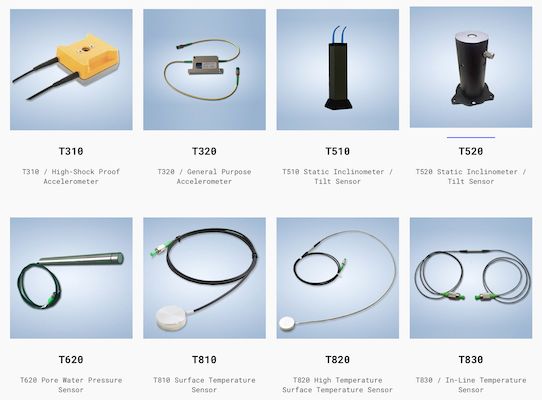
1   Temperature sensors

Temperature sensors are, according to their description, "devices used to measure quantity of heat energy that allow to detect a physical change in temperature from a particular source and convert the data for a device or user."

 These sensors have been used in many different devices for a very long time. However, as the Internet of Things (IoT) has grown, they have more opportunities to be present in more gadgets.

They were primarily used for controlling air conditioning, refrigerators, and other environmental control devices just a few years ago. However, with the emergence of the Internet of Things, they have discovered their place in the manufacturing, agricultural, and healthcare sectors.


2)      Proximity sensor

A device that, without making physical contact with the object(s), detects the presence or absence of the object(s) nearby or the characteristics of the object(s) and transforms the information into a signal that can be readily read by the user or a simple electronic instrument.
 
Due to its ability to detect mobility and the relationship between a consumer and a product they may be interested in, proximity sensors are widely utilised in the retail sector. A user is instantly informed of sales and promotional offers for nearby items.
 
 Vehicles are a significant and very old use case. The proximity sensor alerts you to an obstruction when you are in reverse as you are reversing your automobile.


3   Pressure sensor

A device that detects pressure and turns it into an electric signal is called a pressure sensor. Here, the quantity is influenced by the amount of pressure used. 

There are several gadgets that depend on liquid pressure or other types of pressure. IoT systems that monitor pressure-driven systems and devices may be built using these sensors. The device alerts the system administrator to any deviations from the normal pressure range and any issues that need to be corrected.

Due to their ease of use in spotting pressure changes, these sensors are used not only in production but also in the maintenance of complete water and heating systems.


4)  Level sensors

Level sensors are a type of sensor that measure the amount or level of fluids, liquids, or other substances flowing through an open or closed system.

 Level sensors are utilised in a variety of sectors, just as IR sensors. They are employed by companies that deal with liquid materials and are particularly renowned for gauging fuel levels. For instance, these sensors are used by the recycling sector, the juice and alcohol industries, and others to count their liquid assets.

The best applications for level sensors include fuel gauges and liquid levels in open or closed containers, monitoring sea level and tsunami warning systems, water reservoirs, medical devices, compressors, hydraulic reservoirs, machine tools, beverage and pharmaceutical processing, high or low temperature monitoring.


5)    Optical sensors

The term "optical sensor" refers to a sensor that detects the physical amount of light rays and converts it into an electrical signal that can be easily read by a user or an electronic instrument/device.

IoT specialists choose optical sensors because they are useful for sensing several things simultaneously. This sensor's technology enables it to track electromagnetic energy, which includes electricity, light, and other types of energy.

 This has led to the application of these sensors in a variety of areas, including healthcare, environmental monitoring, energy, and aerospace. With their presence, mining, pharmaceutical, and oil businesses are considerably better able to monitor environmental changes while safeguarding their workers.


Summery:

 There is little doubt that sensors play an important role in both daily living and commercial settings. In the future, they will be widely used in many different industries to address societal problems.
Sensors will be a significant part of work-style improvements, especially if they include a function that permits monitoring without human interaction.
For your IoT business, it could be worthwhile to take into account integrating different types of sensors.


Blog by-

           Gajanan Jadhav

 Unveiling the Power of Project Management: A Beginner's Gateway to Success Across Industries   Embarking on a journey into the real...